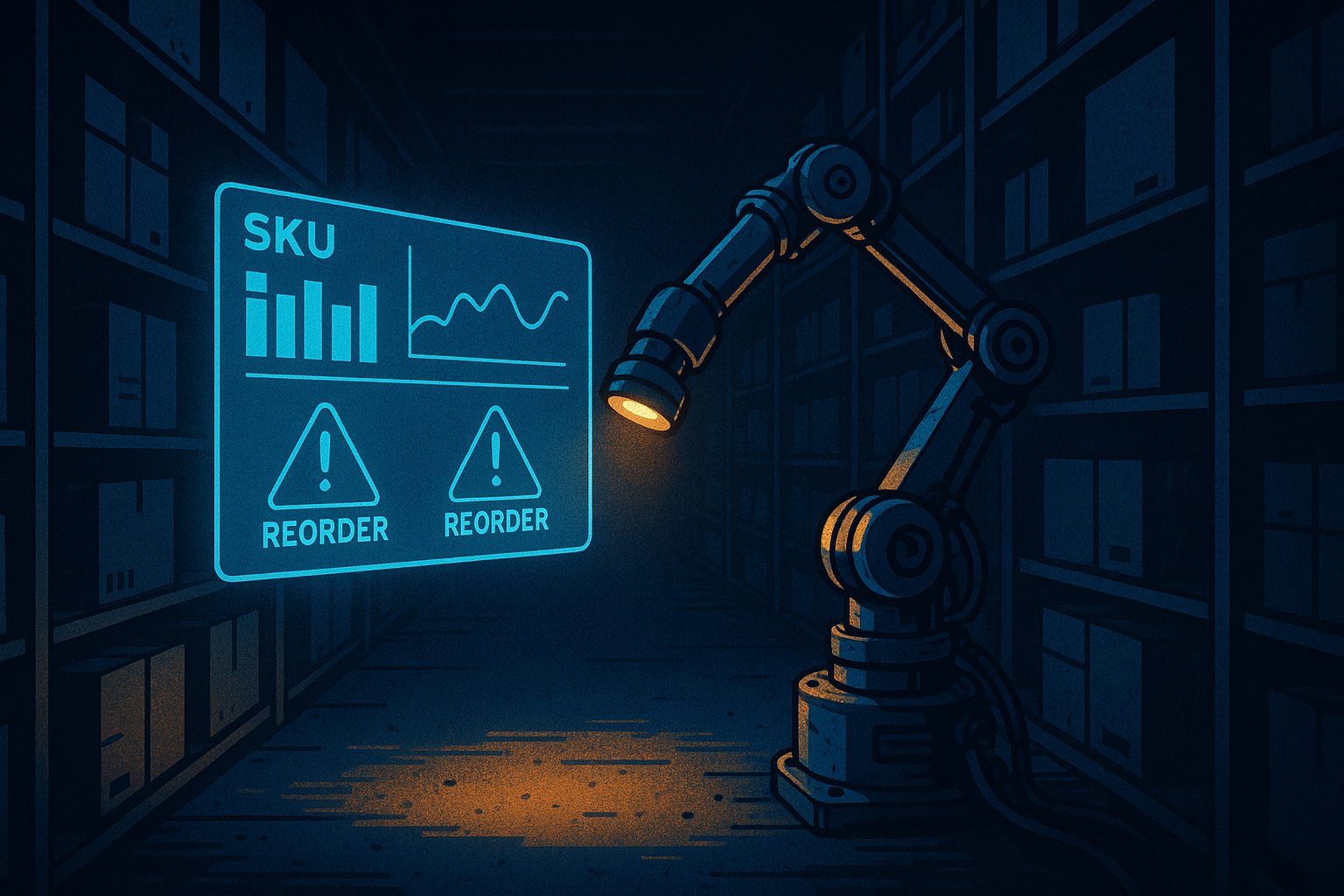
"Agentic AI" has become the label vendors slap on almost any warehouse feature that used to require someone clicking "reorder." The term is doing more work than it's earned. Autonomous replenishment, done properly, isn't a chatbot watching your stock count. It's three connected systems running off the same real-time data, and most warehouses on a five- or ten-year-old WMS don't have the plumbing for any of them yet.
What "Autonomous Replenishment" Actually Means
Strip away the marketing and the pattern holds across most of the frameworks currently showing up in research and vendor documentation: an autonomous replenishment system is really three cooperating pieces of software, not one model.
An inventory monitoring layer watches real-time stock counts per SKU and raises a signal when a level is projected to cross a threshold: not just "we're out," but "we will be out in nine days at current velocity." A demand forecasting layer takes historical sales, seasonality, and external signals (a promotion calendar, a known supplier delay, a regional event) and turns that into a SKU-level demand curve. A reorder decision layer takes the forecast and the current stock position and works out the actual order: how much, from which supplier, timed against that supplier's lead time, weighed against holding cost and, for anything with a shelf life, perishability.
None of this is new by itself. A barcode scanner and a spreadsheet did inventory monitoring badly for twenty years. Demand forecasting is a statistics problem warehouses have run in some form since long before anyone said "AI." What changed is the expectation: these three now have to run continuously, automatically, and in agreement with each other, instead of as three separate reports someone reconciles by hand once a week.
The Architecture Underneath the Marketing Term
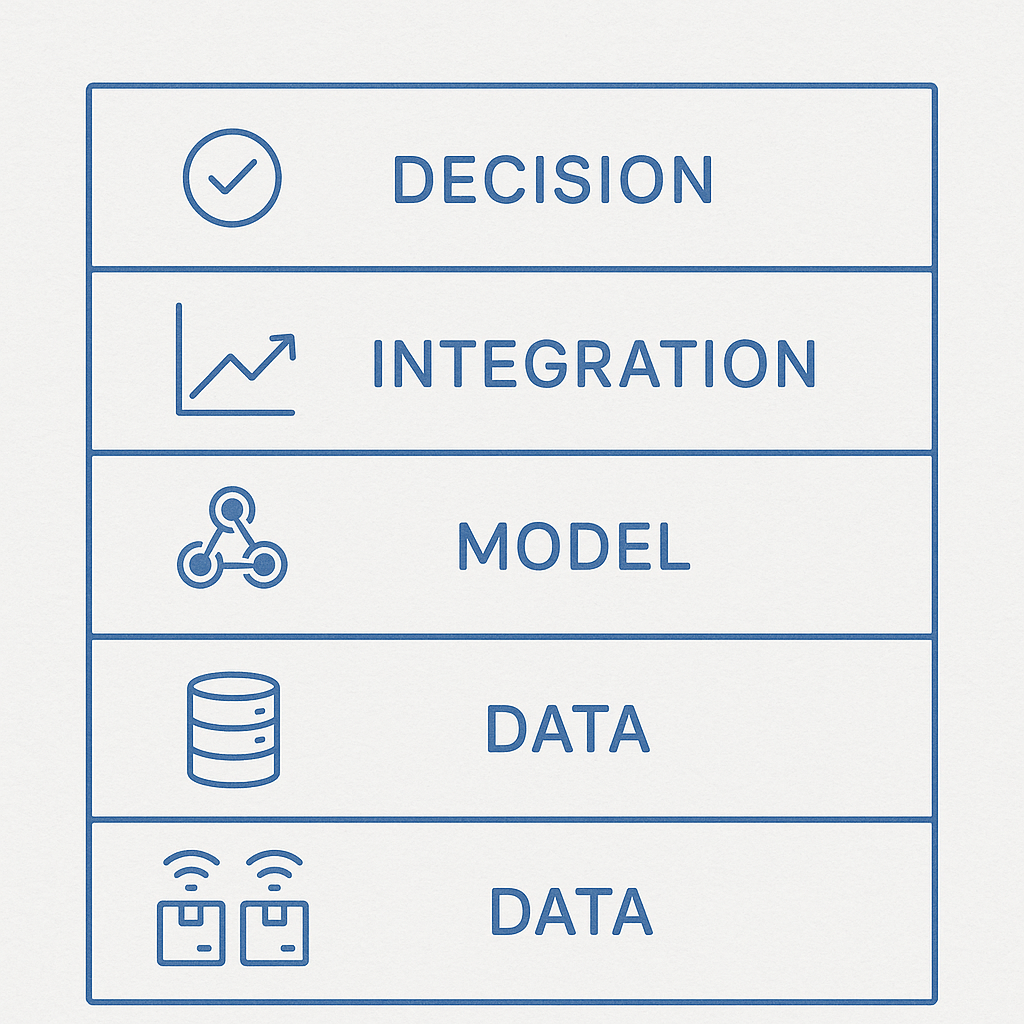
Reference architectures for this kind of system tend to describe four layers. Worth naming them, because each one is a separate integration project, not a checkbox on a vendor's slide.
The data layer has to get inventory counts, sales history, and exogenous signals (weather, promotions, calendar effects) into one place the forecasting layer can read. Most warehouses don't have this yet. Inventory counts live in the WMS, sales history lives in the ERP, nobody's ever piped in supplier lead-time data at all, and the sales pitch quietly skips over that gap.
Then there's the integration layer, the unglamorous part that decides whether any of this works: EDI feeds, webhooks, and API connections moving stock and order data between systems in near-real time, not a nightly batch job. A reorder decision acting on last night's batch export isn't autonomous replenishment. It's automated replenishment on stale data, and that's a meaningfully riskier thing to hand off to a machine.
The model layer is the forecasting and reorder-decision logic itself, and this is genuinely where newer tooling earns its keep: the trade-off between stockout risk, holding cost, and supplier lead time is exactly the kind of multi-variable optimization that's tedious to do well by hand at SKU-level granularity across a large catalog.
Last, the decision layer decides whether the system places the order automatically inside pre-agreed rules, or just surfaces a recommendation for a human to approve. Most real implementations keep a human in that loop longer than the marketing copy implies. Full autonomy on the reorder button is a trust threshold most warehouse operators don't cross on day one, and honestly, that's the right instinct.
Why Most Warehouses Aren't Ready Yet
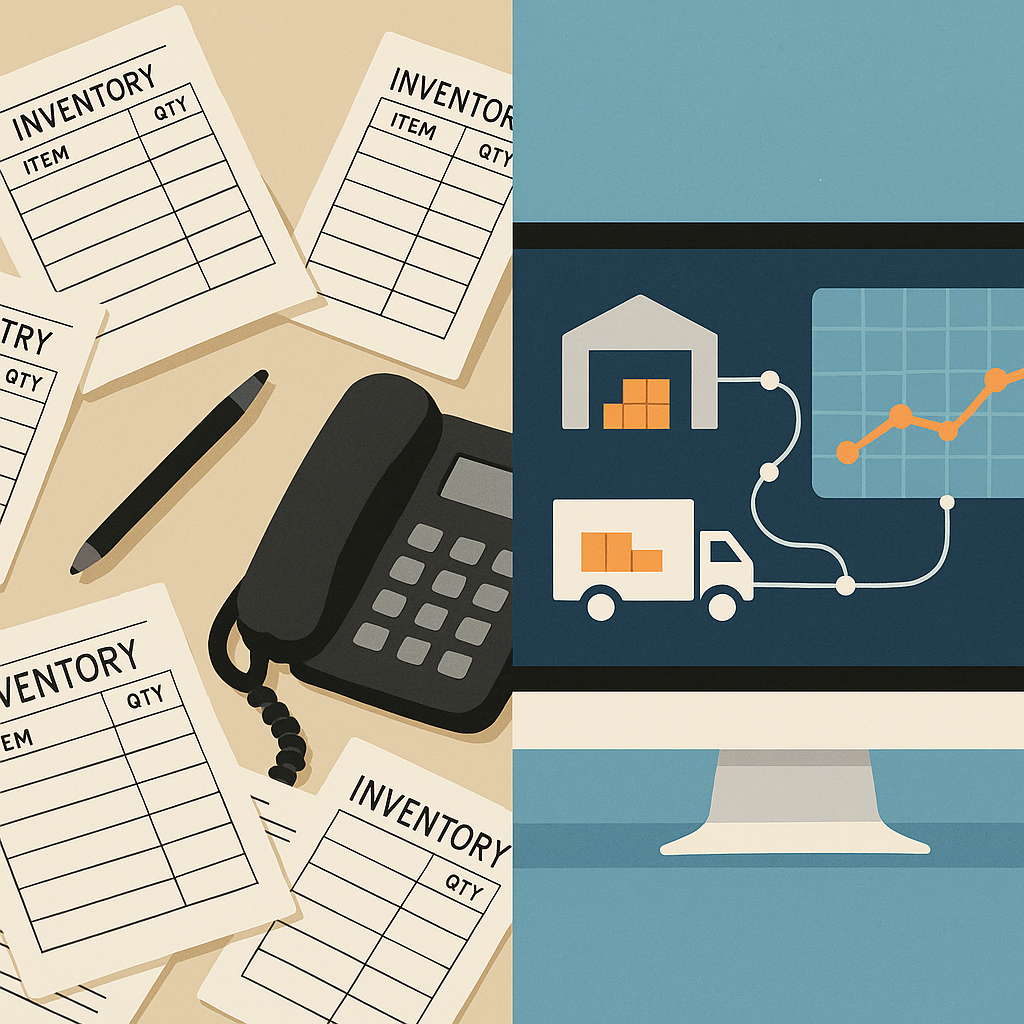
The gap is almost never the forecasting model. It's the integration layer. A warehouse running the same WMS for a decade typically has inventory counts that update on a schedule, not a stream; an ERP that was never built assuming another system would poll it continuously; and supplier communication that still happens over email and phone instead of a structured feed a reorder agent could read.
Bolt a forecasting model onto that setup and you get a system calculating a very good reorder recommendation from inventory data that's already six or twelve hours stale. The recommendation looks sophisticated. The input underneath it isn't autonomous-replenishment-grade at all.
The failure mode is also different from a typical software rollout. A WMS upgrade that goes wrong produces a support ticket. An autonomous reorder system acting on stale or incomplete data produces a stockout it should have prevented, or, worse and less talked about, a warehouse quietly overstocking to compensate because nobody trusts the numbers the system is acting on.
What This Means Before You Scope a Project
If a warehouse operations team is evaluating "agentic AI for replenishment," the useful first question isn't which vendor's model is best. It's whether the data and integration layers underneath already exist. Can inventory counts reach a forecasting system in near-real time, not batch? Is supplier lead-time data structured anywhere a system could read it, or does it live in someone's inbox? Is there demand history clean enough, at SKU granularity, to forecast against?
Where the honest answer to those is mostly "no," the real project isn't "add an AI agent." It's a WMS integration and data-plumbing project that happens to end with a forecasting and reorder layer on top. Different scope, different timeline, different team than the pitch decks usually describe. And it's the difference between a pilot that quietly stalls after the demo and one that survives contact with a real inventory count six months in.
Have a project like this on your desk?
Send us a few lines about where things stand. We will read it, tell you what we would look at first, and whether we are the right people for it.
Talk to us about your case